

You don’t need a quarter-acre lot to have a pool. A strip of side yard, a corner patio, or even a section of a small deck is enough space for a mini pool, and the cost gap between “no pool” and “small pool” is a lot narrower than most people assume. Below are the most practical low budget small backyard mini pool ideas by type, size, and real cost range, plus what actually drives the price up or down.

What Counts as a “Small” Backyard Pool?
The industry doesn’t use one fixed cutoff, but a few terms show up consistently, and knowing them makes shopping a lot easier:
| Pool type | Typical size | Typical installed cost |
|---|---|---|
| Stock tank / inflatable pool | 6–10 ft round | $200–$1,500 |
| Above-ground pool with deck | 12–18 ft round or oval | $3,000–$12,000 |
| Plunge pool | Under 100 sq ft of water surface | $15,000–$30,000 |
| Cocktail pool / spool | 100–300 sq ft, often with spa jets | $20,000–$40,000 |
| Small lap pool | 30–50 ft long, 6–10 ft wide | $25,000–$55,000 |
| Semi-inground pool | Varies, partially recessed | $8,000–$20,000 |
These ranges swing a lot by region, material, and site prep, but they’re a realistic starting point for comparing options before calling a contractor.
10 Low Budget Small Backyard Mini Pool Ideas
1. Stock tank pool
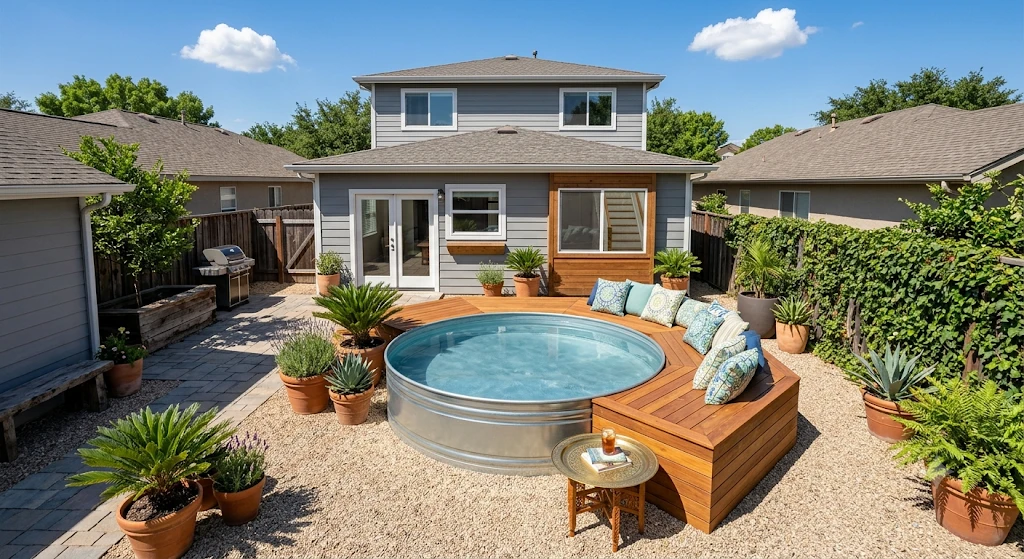
A galvanized steel stock tank, the kind sold for livestock water troughs, has become one of the cheapest ways to get real swimming-pool water in a backyard. A 6- to 8-foot round tank runs a few hundred dollars, needs no digging, and can be dressed up with a simple wood surround so it doesn’t look like it walked out of a feed store.
2. Soft-sided inflatable pool with a simple deck
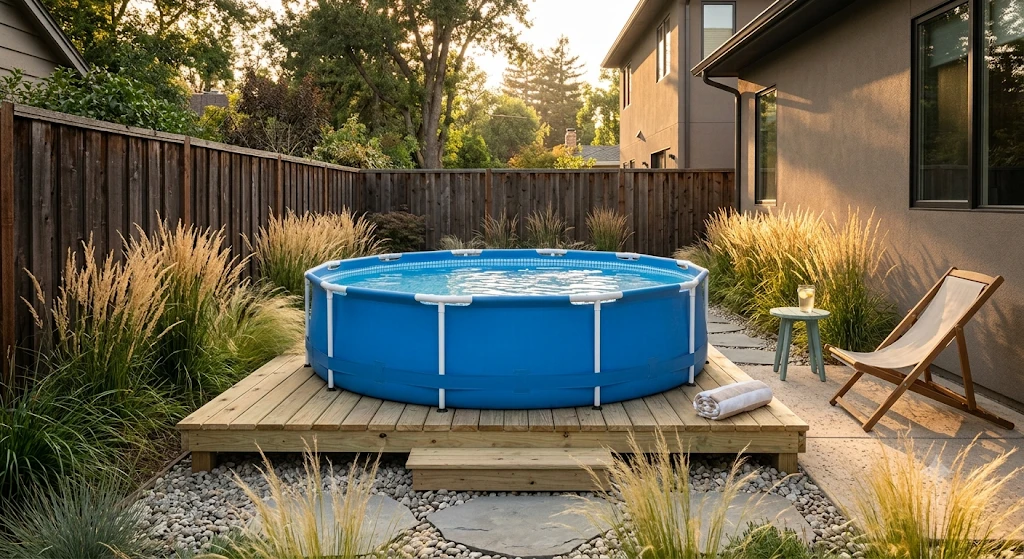
Inflatable and soft-sided frame pools start around $200 and need zero construction, which makes them the fastest route to a small backyard mini pool on a genuinely tight budget. A basic wood deck platform around the base, even a single low step, changes the whole look from “kiddie pool” to intentional backyard feature.
3. Above-ground pool with built-in decking
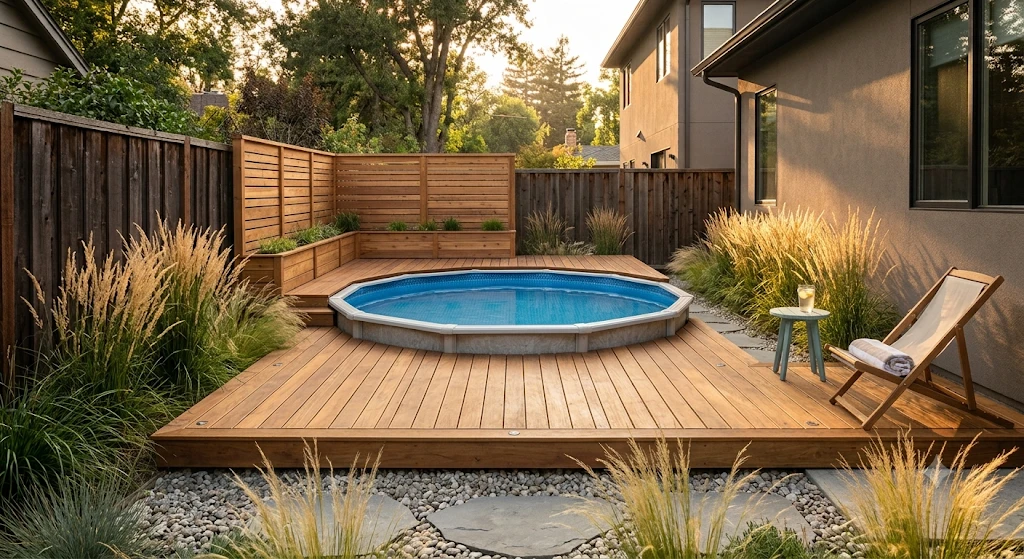
A round or oval above-ground pool paired with a wraparound deck and a privacy fence section gets close to the look of an inground pool at a fraction of the cost. The deck and fencing usually cost more than the pool itself, but the combination still lands well under what excavation for an inground pool would run.
4. Small plunge pool
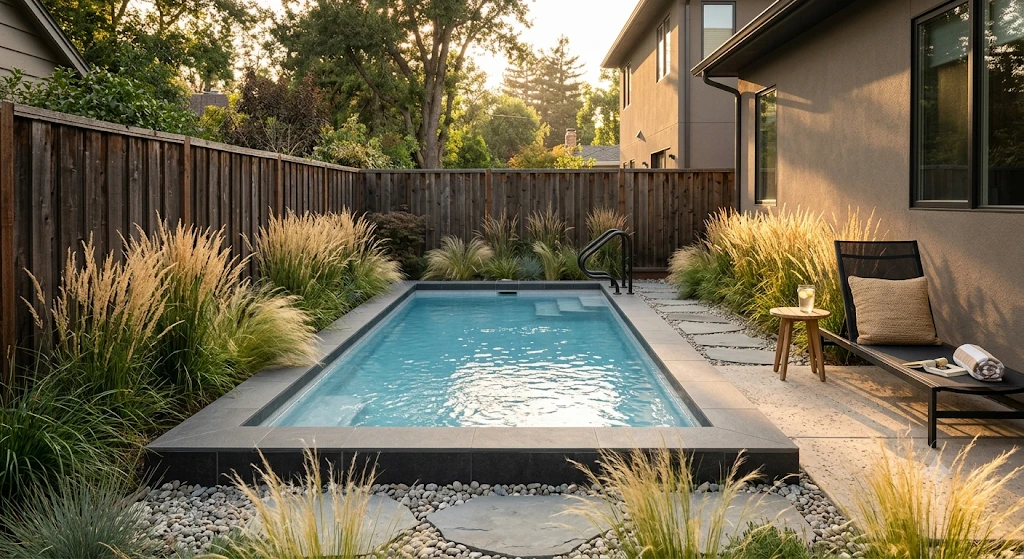
A plunge pool is built for cooling off and soaking rather than swimming laps, typically under 100 square feet of water surface and 4 to 6 feet deep. Fiberglass shell plunge pools are the budget-friendlier route compared to poured concrete, since there’s no on-site forming or extended curing time.
5. Container pool
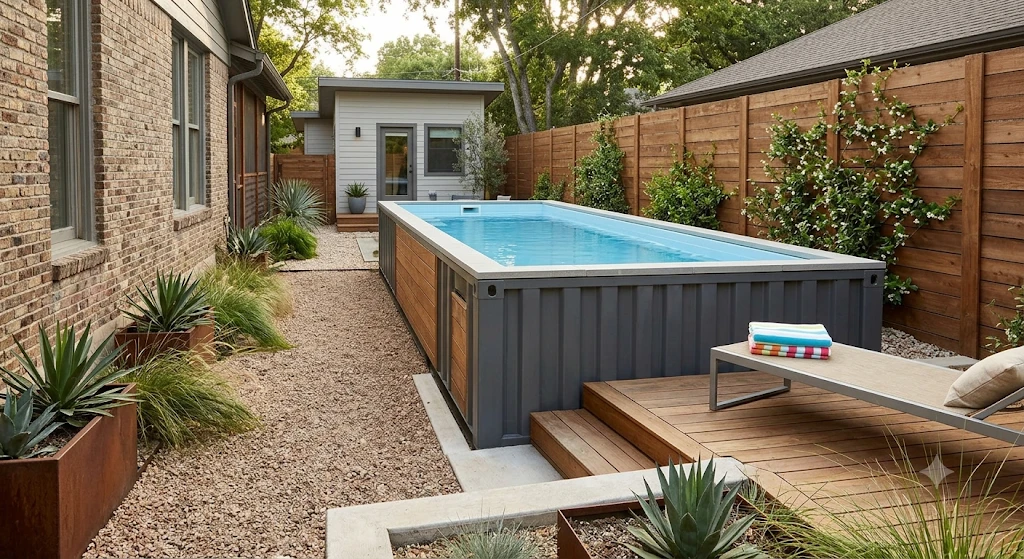
Recycled shipping containers, cleaned and fitted with a liner or fiberglass insert, are a growing option for narrow or awkward-shaped yards. They install faster than a fully excavated pool since most of the fabrication happens off-site, though the container and delivery costs put this option above a basic plunge pool rather than below it.
6. Cocktail pool or spool
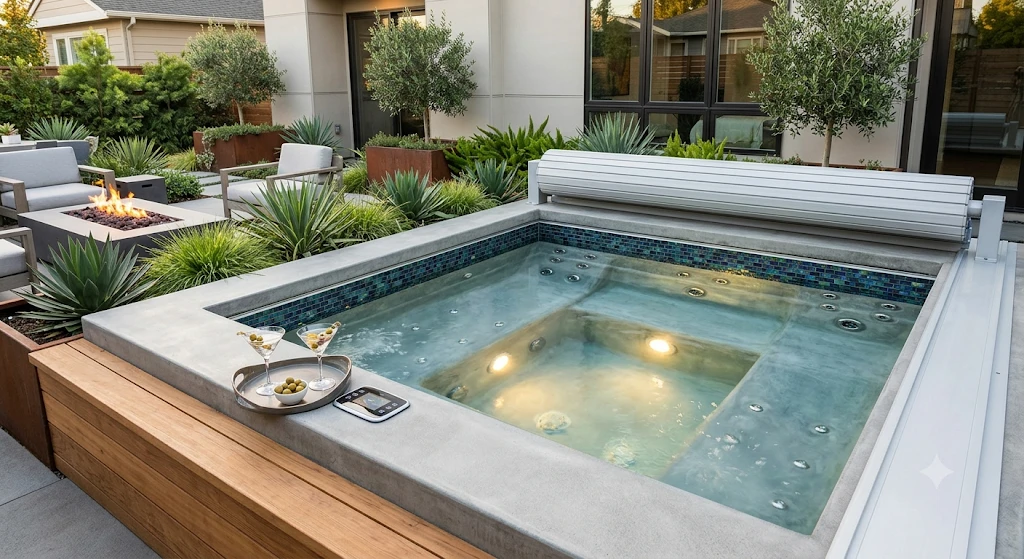
A spool, short for spa-pool, is a small pool built with integrated jets and enough depth to double as a hot tub. It’s a strong option for anyone who wants year-round use rather than a pool that only makes sense three months a year, and the smaller water volume keeps heating costs more reasonable than a full-size pool.
7. Small lap pool for a narrow side yard
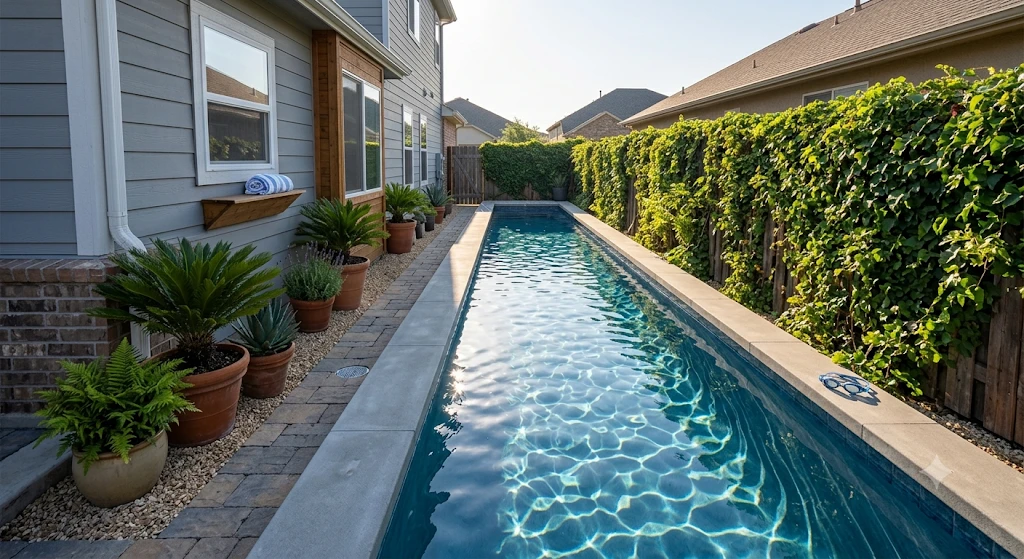
A lap pool trades width for length: 30 to 50 feet long and often just 6 to 10 feet wide, which makes it one of the few pool styles that actually fits a narrow side yard or a slim strip along a fence line. Because the footprint is so narrow, excavation and material costs per square foot can come in lower than a wider pool of the same total water volume.
8. Fiberglass shell mini pool
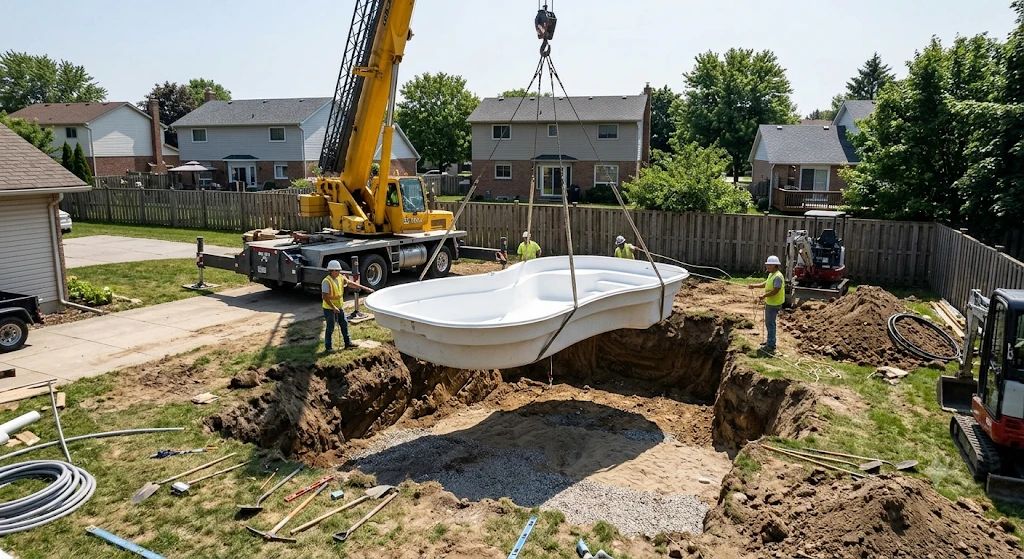
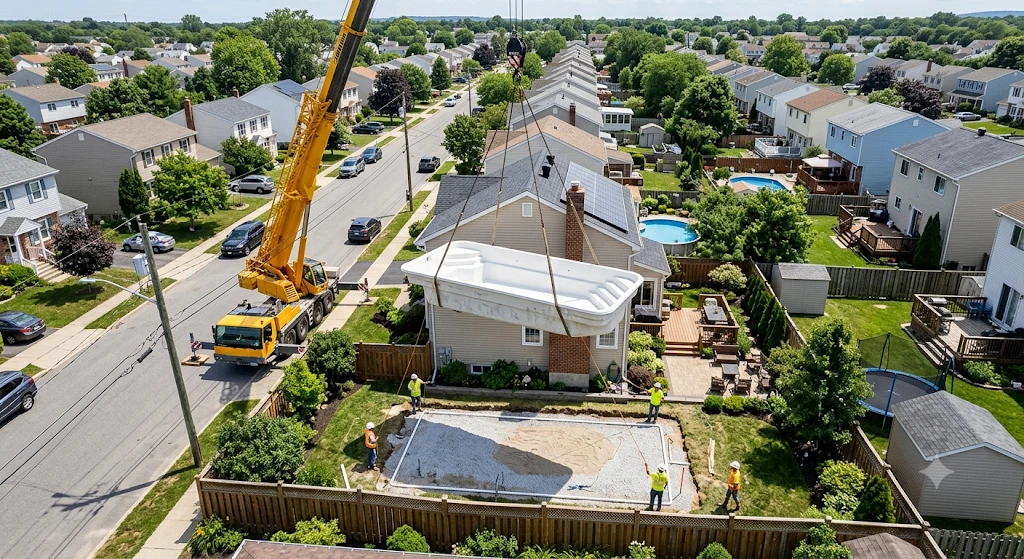
Prefabricated fiberglass shells, delivered whole and lowered into an excavated hole, cut weeks off the install timeline compared to poured concrete or gunite. For small pools specifically, fiberglass tends to be the lower-cost shell material, since the manufacturing cost scales with size and small shells are simply cheaper to produce and ship.
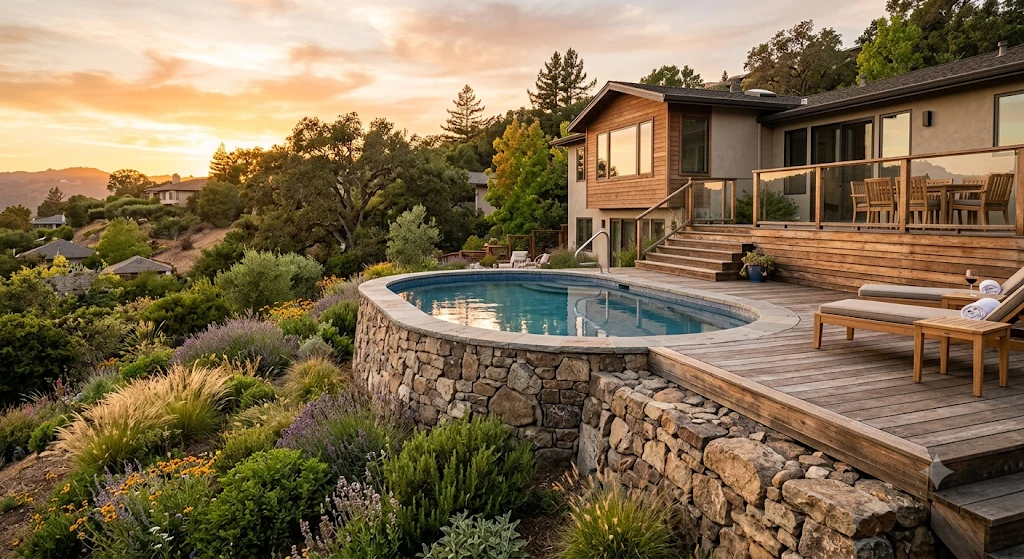
9. Semi-inground pool for a sloped yard
On a yard with any real grade, a semi-inground pool — partially recessed into a retaining wall or built into a slope — often costs less than fully excavating and leveling a flat inground footprint. It also solves a drainage problem a flat-yard pool doesn’t have to deal with.
10. Modular prefab pool
Modular pools, delivered in one piece by crane and set directly into a prepared base, are built specifically for backyards where a multi-week excavation isn’t practical or affordable. Sizes in this category commonly range from small plunge-pool dimensions up to a compact lap pool, with faster installation timelines than a fully custom build.
Small Lap Pool Ideas for Narrow Backyards
A narrow yard is actually a good candidate for a lap pool, not a disqualifying factor. A few things make small lap pool ideas work in a tight space:
- Run it along the property line, not across the yard. A pool that follows a fence or side wall leaves the rest of the yard usable for a patio, planting, or storage.
- Keep the width to what the space allows. Six feet is enough to swim in; the length matters more than the width for actual lap swimming.
- Skip the deep end. A consistent 3.5–4 foot depth throughout keeps excavation costs down and works fine for swimming laps, since lap pools aren’t built for diving.
- Use the pool coping as the walkway. In a narrow yard, a wide separate path plus a pool edge wastes space that could go toward a slightly longer pool.
Cheap Small Inground Pools: What Actually Keeps Costs Down
A handful of decisions move the price on cheap small inground pools more than anything else:
- Fiberglass over gunite or concrete. A prefabricated shell skips weeks of on-site forming, rebar, and curing time, and that labor reduction is usually the single biggest cost difference between materials.
- Simple shapes. A rectangle or oval costs less to excavate and finish than a freeform pool with curves, since curved edges need more custom coping and tile work.
- Minimal decking. A narrow concrete or paver border instead of a full wraparound patio cuts a real chunk of the total project cost without touching the pool itself.
- Standard equipment packages. Skipping heaters, automatic covers, and water features at install keeps the base cost down; most of these can be added later if the budget allows.
- Off-season scheduling. Booking installation in fall or winter, where climate allows, sometimes comes with lower rates than peak spring and summer demand.
Best Small Pools for Backyard by Space Type
Matching the pool style to the actual shape of the yard avoids a lot of wasted planning:
- Narrow side yard: small lap pool or a slim spool, both built to run long and stay narrow.
- Small square backyard: a plunge pool or cocktail pool, since the compact footprint fits a symmetrical space without leaving awkward leftover corners.
- Sloped yard: semi-inground or fully inground with a retaining wall, using the grade instead of fighting it.
- Patio-only space with no yard to dig: stock tank pool or above-ground pool with decking, since neither requires excavation.
- Corner lot with limited privacy: a plunge pool or spool paired with fencing or dense planting on the exposed sides.
Plan the Space Before You Build
Before ordering a shell or renting excavation equipment, it helps to see the pool in the actual yard rather than picturing it from a catalog photo. Tools like LandscapeAI let homeowners upload a real photo of their backyard and generate layout concepts that account for the existing patio, fence lines, and landscaping, which makes it easier to judge whether a plunge pool or a lap pool actually fits before committing to a design.
FAQ
What’s the cheapest way to get a pool in a small backyard?
A stock tank or inflatable pool is the lowest-cost route, often under $1,000 total, with no excavation required. It’s the right call for a seasonal setup rather than a permanent backyard feature.
How small can an inground pool actually be?
Plunge pools can run as small as roughly 8 by 12 feet, or under 100 square feet of water surface, which is enough for cooling off and light exercise but not for swimming laps.
Do small pools cost less to maintain than full-size pools?
Generally yes. Smaller water volume means less chemical use, lower heating costs, and a shorter pump run time, though the maintenance routine itself — testing, cleaning, seasonal opening and closing — is largely the same regardless of size.
Is a lap pool a good option for a small yard, or does it need extra space?
A lap pool actually suits a narrow yard better than a square one, since it trades width for length and can run along a side property line where a wider pool wouldn’t fit.
Do small pools need a permit like full-size pools do?
In most areas, yes, especially anything permanently installed and holding more than a shallow depth of water. Local codes vary on fencing and depth requirements, so it’s worth checking before committing to a layout.
Bottom Line
A small backyard doesn’t rule out a pool, it just narrows the shape and style that make sense. Whether that’s a stock tank pool for a season, a fiberglass plunge pool built into a corner, or a narrow lap pool running the length of a side yard, the low budget small backyard mini pool options here cover most compact outdoor spaces without requiring a full-size backyard to make them work.
